Source Metal Seed Storage Tin Box for Home, Garden, and Desktop
Explore 30 options for a metal seed storage tin box designed for home, garden, and desktop use. Compare specifications like powder-coated carbon steel construction, custom logo capabilities, and various sizes to find the ideal container for organizing seeds and small plants.
Key considerations
Products List


Comprehensive Sourcing Guide
Metal Seed Storage Tin Box Sourcing Guide
Sourcing metal seed storage tin boxes requires a clear understanding of the specific material properties and finishing processes that ensure long-term viability for agricultural and horticultural use. Buyers must distinguish between generic metal containers and specialized seed storage solutions designed to protect viability against moisture and pests. The primary material observed in current listings is carbon steel, which offers a robust structural integrity necessary for stacking and heavy-duty garden environments. This material choice directly influences the weight, durability, and cost structure of the final product, making it essential for procurement teams to verify the exact gauge and grade of steel before placing bulk orders.
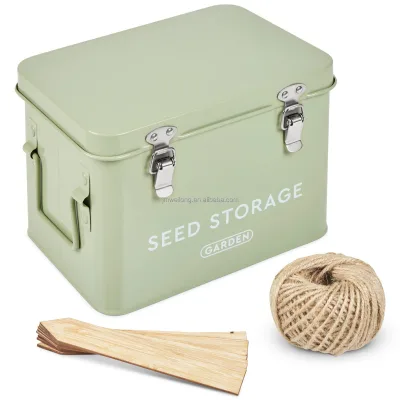
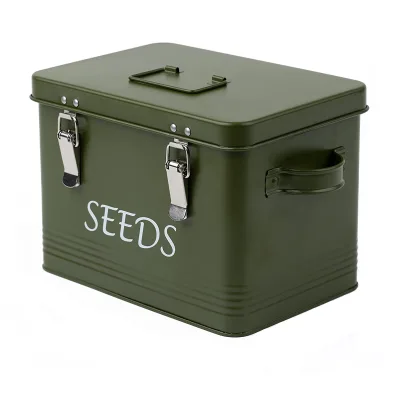
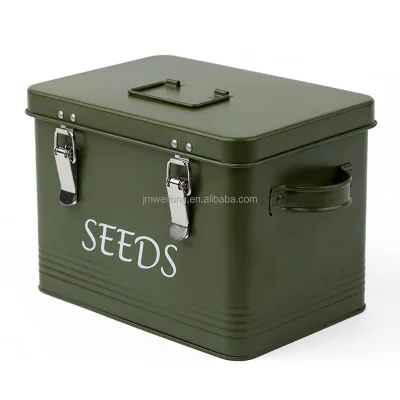
The aesthetic and functional customization options available in this category allow brands to create unique shelf presence while maintaining practical utility. Common styles include modern rectangular designs with powder-coated finishes that provide both visual appeal and corrosion resistance. Buyers should note that customization extends to colors, such as light green or army green, and the inclusion of customized logos, which supports brand identity in retail settings. However, the availability of OEM and ODM services varies by supplier capability, requiring early engagement to align design specifications with manufacturing constraints and minimum order quantities.
Product Scope and Observed Listing Signals
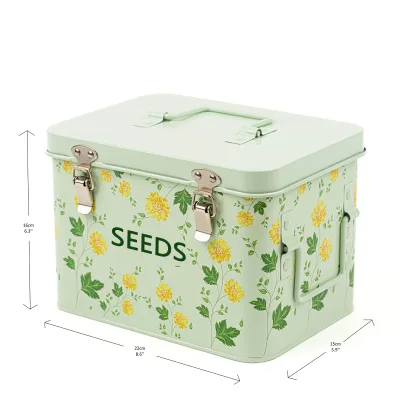
The current market landscape for metal seed storage tin boxes reveals a diverse range of product configurations tailored to different storage needs. Listings indicate a variety of sizes, with specific dimensions such as 22x15x16 cm and larger formats like 30x30x50 cm for packaging, suggesting flexibility in volume capacity. Some products are categorized explicitly as seed boxes with capacities ranging from 1L to 3-6L, while others are labeled broadly as floor bougainvillea pots or general containers. This variation highlights the importance of precise specification verification, as a product marketed as a seed box may have structural features intended for larger potted plants, potentially affecting its suitability for small packet storage.
Application contexts observed in supplier data include desktop, home, and garden use, indicating a broad consumer appeal across residential and professional gardening sectors. The presence of features like non-toxic powder coating and customized logo printing suggests a focus on safety and brand differentiation. Buyers should pay attention to the listed single gross weight, which typically hovers around 1.0 kg, as this impacts shipping costs and handling logistics. Additionally, the observation of stock availability for certain models provides an alternative to custom manufacturing, offering faster lead times for buyers with immediate inventory requirements.
Technical Specifications to Verify
Verifying the dimensional accuracy and structural tolerances is critical for ensuring that the metal seed storage tin boxes fit standard shelving and storage systems. Buyers should request detailed technical drawings that confirm the external and internal dimensions, particularly for products claiming specific capacities like 1L or 3-6L. The observed dimensional tolerance of less than ±1mm indicates a high level of manufacturing precision, which is essential for maintaining airtight seals or ensuring uniform stacking. Deviations in size can lead to packaging inefficiencies and compromised storage conditions, so rigorous quality checks on sample units are recommended before mass production begins.
The finishing process, specifically powder coating, plays a significant role in the longevity and safety of the storage container. Buyers must verify that the coating is applied evenly and adheres properly to the carbon steel substrate to prevent chipping or peeling during transport and use. The non-toxic nature of the coating is a key selling point, but this should be supported by material safety data sheets rather than just marketing claims. Additionally, the glossy finish observed in some listings may affect visibility of contents, so buyers should consider whether a matte or textured finish might better serve their specific retail or storage needs.
Compliance and Safety Documentation
Compliance with international social and ethical standards is a significant factor for many global buyers sourcing from manufacturers in Guangdong, China. The presence of BSCI certification in supplier listings indicates a commitment to ethical labor practices, which can be a prerequisite for entry into certain retail markets. Buyers should request valid and current BSCI audit reports to verify the supplier’s compliance status, ensuring that the supply chain meets their corporate social responsibility requirements. This documentation not only mitigates reputational risk but also demonstrates the supplier’s professionalism and adherence to recognized operational standards.
While specific chemical compliance standards like REACH are mentioned in background contexts, buyers must explicitly confirm whether the metal seed storage tin boxes meet the regulatory requirements of their target markets. This includes verifying that the powder coating and any inks used for logo printing are free from restricted substances. Although FSC certification is noted in background data, it is less relevant for metal products, so buyers should focus on material safety certifications relevant to metal and coating components. Requesting third-party test reports for heavy metal content and volatile organic compounds can provide additional assurance of product safety.
Cost Drivers and Commercial Terms
The cost structure of metal seed storage tin boxes is influenced by several key factors, including the price of raw carbon steel, the complexity of the powder coating process, and the extent of customization. Minimum order quantities (MOQ) observed in the market range from 500 to 30,000 pieces, with some listings specifying 500 pcs as a standard threshold. Buyers with lower volume requirements may face higher per-unit costs or need to negotiate exceptions to the MOQ, while larger orders can leverage economies of scale to reduce unit prices. Understanding these volume tiers is essential for accurate budgeting and inventory planning.
Payment terms and lead times are critical commercial considerations that vary among suppliers. Buyers should clarify the deposit requirements, balance payment conditions, and estimated production lead times before finalizing contracts. The availability of stocked items can significantly reduce lead times, offering a faster route to market for standard designs. However, custom OEM orders involving logo printing and color matching will require additional time for setup and production. Negotiating clear terms for shipping, packaging, and liability for defects is also necessary to protect the buyer’s interests and ensure smooth transaction execution.
Supplier Qualification and Quality Control
Evaluating supplier qualifications involves assessing their manufacturing capabilities, experience, and quality management systems. Suppliers with extensive experience, such as those citing 37 years in the industry, may offer greater reliability and technical expertise. Buyers should verify the supplier’s production capacity and facility conditions to ensure they can meet volume demands without compromising quality. Requesting references or case studies from previous clients can provide insights into the supplier’s performance and consistency in delivering metal seed storage tin boxes.
Quality control procedures should be clearly defined and agreed upon before production starts. This includes specifying inspection points for raw material incoming, in-process checks during powder coating, and final random inspections before shipment. Buyers should consider hiring third-party inspection services to conduct pre-shipment inspections, ensuring that the products meet the agreed-upon specifications for dimensions, finish, and functionality. Establishing a clear protocol for handling defects or non-conforming goods is also essential to minimize disruption and maintain supply chain integrity.
Long-Term Procurement Checks
Establishing a long-term procurement strategy for metal seed storage tin boxes requires ongoing monitoring of supplier performance and market trends. Buyers should regularly review supplier quality metrics, including defect rates and on-time delivery performance, to ensure continued reliability. Building a strong relationship with the supplier can facilitate better communication, priority treatment during peak seasons, and potential cost savings through volume commitments. Regular audits and site visits, if feasible, can help maintain high standards and identify areas for improvement in the manufacturing process.
Adapting to changes in material costs and regulatory requirements is also crucial for long-term success. Buyers should stay informed about fluctuations in steel prices and any updates to compliance standards in their target markets. Diversifying the supplier base can mitigate risks associated with single-source dependency, ensuring continuity of supply. Additionally, exploring opportunities for product innovation, such as new designs or enhanced features, can help maintain competitive advantage in the evolving garden and home storage market.
FAQs
What material is used for the metal seed storage tin box?
The metal seed storage tin box is constructed from carbon steel and metal materials. It features a powder-coated finishing process that ensures a non-toxic surface suitable for home and garden applications while maintaining durability for storing flower or green plant seeds.
Can I request a customized logo on the metal seed storage tin box?
Yes, a customized logo is acceptable for the metal seed storage tin box. The product supports OEM and ODM services allowing buyers to specify their branding. This customization option is available alongside choices for customized colors to meet specific design requirements.
What is the minimum order quantity for the metal seed storage tin box?
The minimum order quantity for the metal seed storage tin box is 500 pieces. This MOQ applies to the standard model WL-1131 and other variants like WL-Q009S. Buyers should note that observed ranges in the market may vary between 300 and 30000 pieces depending on the supplier.
Which certifications does the metal seed storage tin box hold?
The metal seed storage tin box holds BSCI certification. This indicates compliance with social accountability standards for the manufacturing process. The product originates from Guangdong, China, and utilizes a non-toxic powder coating process to ensure safety for storing seeds and plants.
How large is the single package size for the metal seed storage tin box?
The single package size for the metal seed storage tin box varies by model. One variant measures 30 by 30 by 50 cm while another measures 40 by 15 by 20 cm. The single gross weight is typically around 1.000 kg for efficient shipping and handling.
What colors are available for the metal seed storage tin box?
Available colors for the metal seed storage tin box include light green and army green. Buyers can also request customized colors to match their specific needs. The product features a modern style with a square pattern suitable for desktop, home, or garden environments.
What is the capacity of the metal seed storage tin box?
The capacity of the metal seed storage tin box ranges from 3 to 6 liters. Some specifications list a size of 1 liter or dimensions of 22 by 15 by 16 cm. The box is designed to hold up to 5kg of load for storing flower or green plant seeds effectively.